
How to Plan a Garden Wine Tasting for Six Guests
Six is the number that makes a garden tasting work. Small enough that everyone sits at one table and shares one conversation, large enough that the bottles get finished and nobody feels obliged to carry the evening alone. It is also the number at which outdoor logistics stop being charming improvisation and start needing a plan: the sun moves, the wind takes napkins, glasses multiply faster than you expect, and a bottle left in the open air warms quicker than any wine deserves. Sort out the physical setup first and the tasting itself becomes easy. Here is how to do it properly, without turning your garden into a events venue.
Begin with the table and the walking room
Six people need either a round table of about 150–180 cm or a long one with three guests per side. Allow 65–70 cm of table edge per person; less than that and elbows start negotiating for space before the first pour. Leave roughly 90 cm behind the chairs so people can push back without crashing into a planter.
The more useful decision is where you put the bottles. Set up a small side table within two steps of your own seat, holding the wines, a cooler, spare glasses, water and a cloth. Pouring from a side table keeps the main table clear and gives you somewhere to retreat to when a bottle needs opening. If your garden is on a slope, find the flattest patch you have and check the table does not rock; on soft grass, a flat board under the legs saves a lot of quiet wobbling.
Keep the service side of the table free of guests. It feels formal, but it means you are never reaching across someone's shoulder with an open bottle.
Solve the shade before you choose the wine
Walk out at the hour your tasting will actually start, not at eleven in the morning when the garden looks its best. Shade needs to cover the chairs as well as the table, and it needs to hold for two hours, not twenty minutes. A single umbrella over a six-person table is usually too small; a tree plus an umbrella, or a shade sail angled to catch the afternoon sun, works better.
Two details are easy to miss. Deep, dappled shade makes wine look dull in the glass and makes labels hard to read, so aim for even cover rather than a leafy pattern. And glare is the enemy of a white wine: a table in full reflected light flattens aromas visually before anyone has smelled anything. If the sun will swing into faces by four o'clock, move the table at three rather than apologising at four.
If the tasting runs into the evening, plan light early: a few candles in storm glasses down the centre, kept away from the glasses so you are not smelling citronella instead of Chardonnay.
Glassware: three per person, and not one more
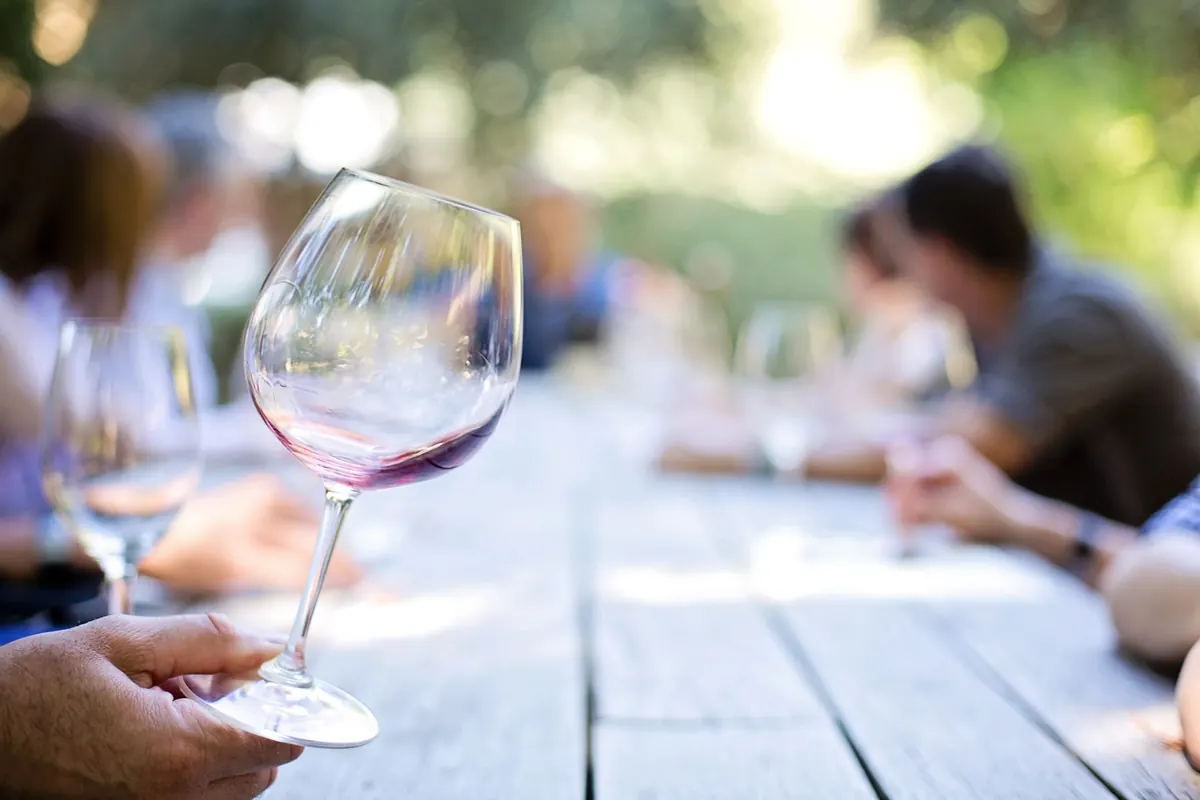
Three glasses per guest is the practical maximum outdoors: two for wine, one for water. That is eighteen glasses, which is already a full drying rack. One wine glass for whites and rosé, one for reds, is enough for six people and a handful of bottles; rinsing between wines with a splash of water is fine for a casual tasting and saves you from washing thirty pieces of stemware.
Choose stemmed, tulip-shaped glasses with a reasonably thick bowl. Thin, expensive glass outdoors is an accident waiting to happen, and a chip in the first ten minutes sets a nervy tone. Stemless tumblers look relaxed but transfer hand warmth and fingerprints, which matters when you are trying to show a cool-climate white at its best.
- Two wine glasses and one water glass per guest, plus two spares.
- One spittoon or dump bucket for every three guests, placed between pairs rather than in the middle.
- A jug of clean water for rinsing, and a second for drinking.
- A sturdy tray for carrying glasses; never carry six in two hands.
- Heavy linen or weighted paper napkins, since light ones leave the table at the first breeze.
- A plastic crate with dividers, or clean cloths, for bringing the glasses out and back in.
Pour sizes and the arithmetic of six
A tasting pour is 40–50 ml; a generous garden pour is 75 ml. The difference decides how many bottles you open. A standard 750 ml bottle gives you fifteen pours at 50 ml and ten at 75 ml. For six guests, a 50 ml pour means one bottle covers that wine with roughly half left over, which is wasteful if you are opening five different bottles. At 75 ml, one bottle serves six people properly with a splash spare.
Five wines at 50 ml each is 250 ml per guest across two hours, roughly a third of a bottle with food and water alongside. That is a sensible, sociable amount. Five wines at 75 ml is closer to half a bottle each, which is still modest but needs a longer afternoon and more bread.
You do not need to measure every pour. Measure one 50 ml pour into your own glass once, note where it sits in the bowl, and use that level as your reference for the rest of the day. If a wine is especially good, the second pass is where generosity lives.
Timing the afternoon in blocks
Allow around twenty minutes per wine and build in one deliberate pause. A workable shape for a five-wine tasting starting at three:
- 3:00 — Guests arrive. Pour something cold and simple that is not part of the flight, so nobody is drinking their first serious wine while still finding a chair.
- 3:20 — Two whites, side by side, 50 ml each. Talk about them together rather than one at a time.
- 4:05 — Break. Refill water, check the shade, bring out bread and olives.
- 4:20 — Two reds. Open them at the side table and keep the bottles out of the sun between pours.
- 5:05 — The final wine, poured more generously, with something to eat alongside.
- 5:30 — Slow finish. No new bottles unless someone asks.
Temperature is the part most hosts underestimate. Whites come out of the fridge too cold and need fifteen or twenty minutes in the glass to open up; reds served in a garden above 26°C will taste flabby within half an hour. Keep whites in a cooler at the side table, keep reds in shade rather than on ice, and bring bottles out two at a time instead of lining all five up in the sun.
Food, water and the small comforts
Keep food plain and low-mess: bread, a couple of cheeses, olives, salted nuts, sliced fruit. Heavy sauces, garlic-heavy dips and anything very spicy will flatten the wines you have spent money on. One litre of water per guest across the afternoon is a reasonable target, set out where people can help themselves.
Chairs with backs, not stools, since people will sit for two hours. Check the route to the bathroom and leave a light on. Deal with insects before guests arrive rather than at the table, and ask about dietary needs when you send the invitation, not when the plates are out.
The ten minutes before guests arrive
Glasses out and counted. Water jugs filled. Bottles in shade at the side table, whites in the cooler with a cloth over the top. Spittoon placed and half-filled with water so it does not tip. Napkins weighted, candles ready if needed, and a spare jumper or two on a chair for the guest who always gets cold. Then sit down in one of the seats yourself and look at the view from there. If the table feels crowded or the sun is in your eyes, you still have ten minutes to fix it — and that is exactly the sort of small correction that separates a pleasant afternoon from a memorable one.
Photo: Pixabay / Pexels